
🚀 Periodic: Robots Run the Experiments
A record-breaking $300M seed to build AI scientists that run their own robotic labs

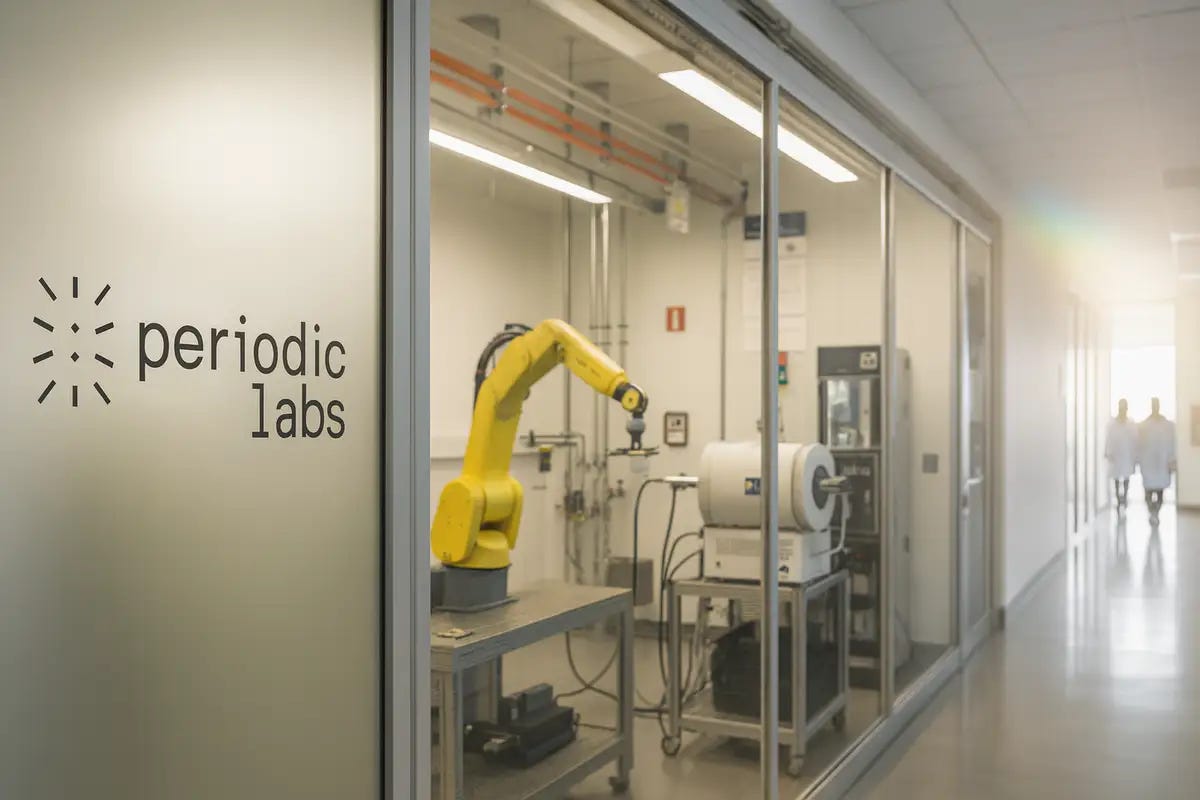
The world's smartest AI models have read the entire internet—and they've hit a wall. The next breakthrough won't come from more text. It'll come from real experiments, in real labs, with real atoms. This week's startup, Periodic, is building AI scientists that run their own robotic laboratories to discover materials that don't exist yet. Let's check them out!

⚾️ The Elevator Pitch
Here's the problem with AI right now: frontier models have essentially memorized the internet's ~10 trillion tokens of text data, and they're running out of new things to learn. Meanwhile, the physical world—materials science, chemistry, superconductors—remains largely uncharted by AI. Over 90% of materials science experiments fail, and those failures almost never get published. That's a massive blind spot, and a massive opportunity.
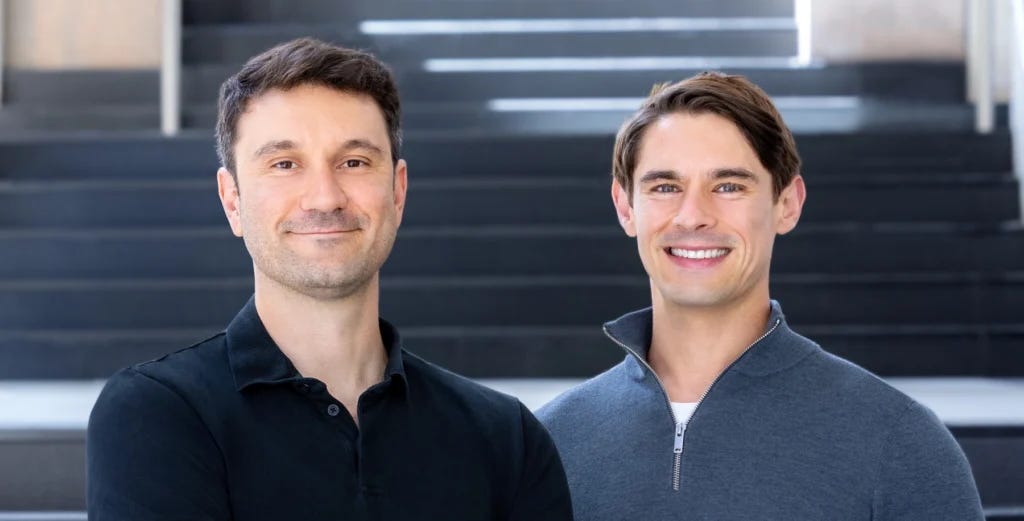
Enter Periodic. Founded by Liam Fedus—a co-creator of ChatGPT and former VP of Post-Training at OpenAI—and Ekin Dogus Cubuk, who led the Google DeepMind team behind GNoME, the AI system that discovered 2.2 million new crystal structures (roughly 800 years' worth of human knowledge). Together they're building a closed-loop system: AI forms hypotheses, robots run physical experiments, spectrometers analyze results, and the model learns from every outcome—including the failures. The company emerged from stealth in September 2025 with a jaw-dropping $300M seed round led by Andreessen Horowitz, with backing from Jeff Bezos, Eric Schmidt, Felicis Ventures, NVentures (NVIDIA), DST Global, and Google's Jeff Dean—valuing the company at roughly $1 billion before shipping a single product.
👇 The Drop Down
🌐 Website: periodic.com
📅 Founded: 2025
👥 Founders: Liam Fedus (Co-Founder), Ekin Dogus Cubuk (CEO)
💰 Stage: Seed – $300M raised from a16z, Felicis, DST Global, NVentures (NVIDIA), Accel, Lightspeed, Jeff Bezos, Eric Schmidt
📈 Traction: Working with customers in semiconductors, space, and defense; 20+ elite researchers recruited from OpenAI, DeepMind, Meta
🔮 Tech Trend: AI for Science / Autonomous Labs / Materials Discovery
🎯 Target Market: Semiconductor manufacturers, defense, energy, advanced materials
🏢 Location: San Francisco, CA (~32-person team)
🔎 Why We Like It
📈 A $15 Trillion TAM That AI Hasn't Touched: The industries Periodic targets—advanced manufacturing, semiconductors, energy, aerospace (represent roughly $15 trillion of global GDP), yet they've barely been touched by AI trained on internet text. The generative AI in materials science market is projected to grow at 33.6% CAGR through 2029. Periodic's core insight is that real scientific breakthroughs require generating new data from real experiments—not just pattern-matching on existing literature. That's a moat no language model can replicate from a data center.
👫 The Dream Team of AI Meets Science: This might be the most credentialed founding team we've ever covered. Liam co-created ChatGPT, built the first trillion-parameter neural network, and led OpenAI's reasoning model work. Dogus authored the GNoME paper in Nature that discovered 2.2 million new crystals and helped build A-Lab, which autonomously synthesized 41 new compounds in 17 days. Their advisory board is chaired by Nobel laureate Carolyn Bertozzi. People are literally turning down million-dollar offers from Meta to join this team.
🏎️ The Proprietary Data Flywheel: Every experiment Periodic runs—success or failure—generates gigabytes of unique, high-signal data that doesn't exist anywhere on the internet. Failed experiments, which make up over 90% of materials science and are almost never published, become training fuel for stronger models. As the models improve, they design better experiments, which generate better data, which train better models. This "conjecture, test, learn" loop is Periodic's real moat—and it only gets wider with time.
🤝 Get Involved with Periodic
💼 Join the team – hiring across AI, engineering, and lab roles!
🎧 Listen to the founders on The Cognitive Revolution podcast