
🚀 Proception: The Hand Robots Have Been Missing
$11M to build human-level robot hands — and the data pipeline to make them smart.

On a single Monday this June, Jay Li did two things most founders never do in a lifetime: he settled a trade-secret lawsuit brought by Tesla, and he announced $11M to keep building the very thing at the center of it — a robot hand dexterous enough to do the work human hands do. His company, Proception, is betting the hand is the hardest unsolved problem in robotics. Let's check them out!

⚾️ The Elevator Pitch
Ask a roboticist what's really holding humanoids back, and a surprising number will point at the fingertips. Robots can walk, see, and hold a conversation — but reliably picking up a wine glass, threading a cable, or buttoning a shirt still defeats the best of them. A Northwestern researcher recently estimated that truly capable robot hands are still roughly a decade out. That gap is the business.
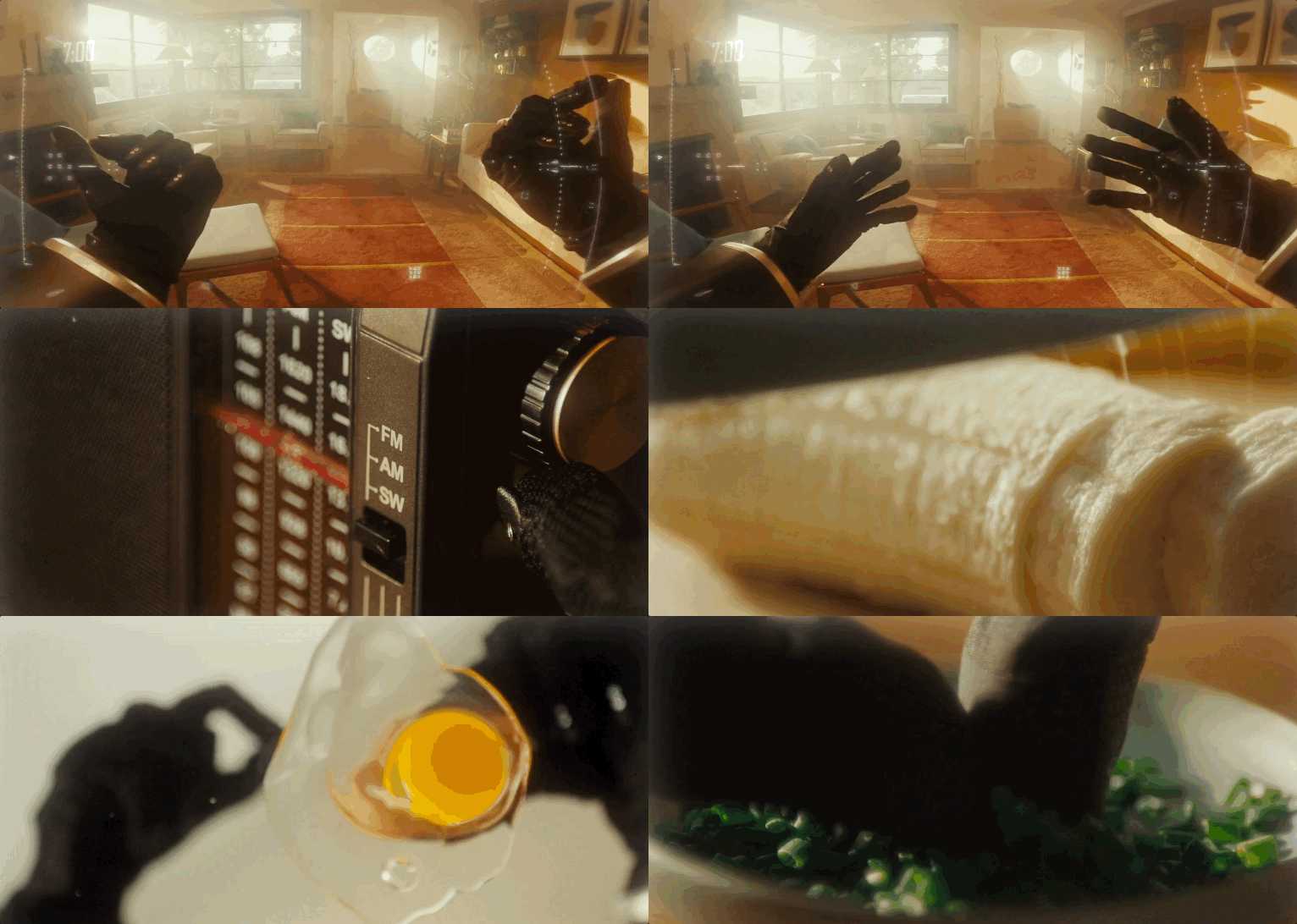
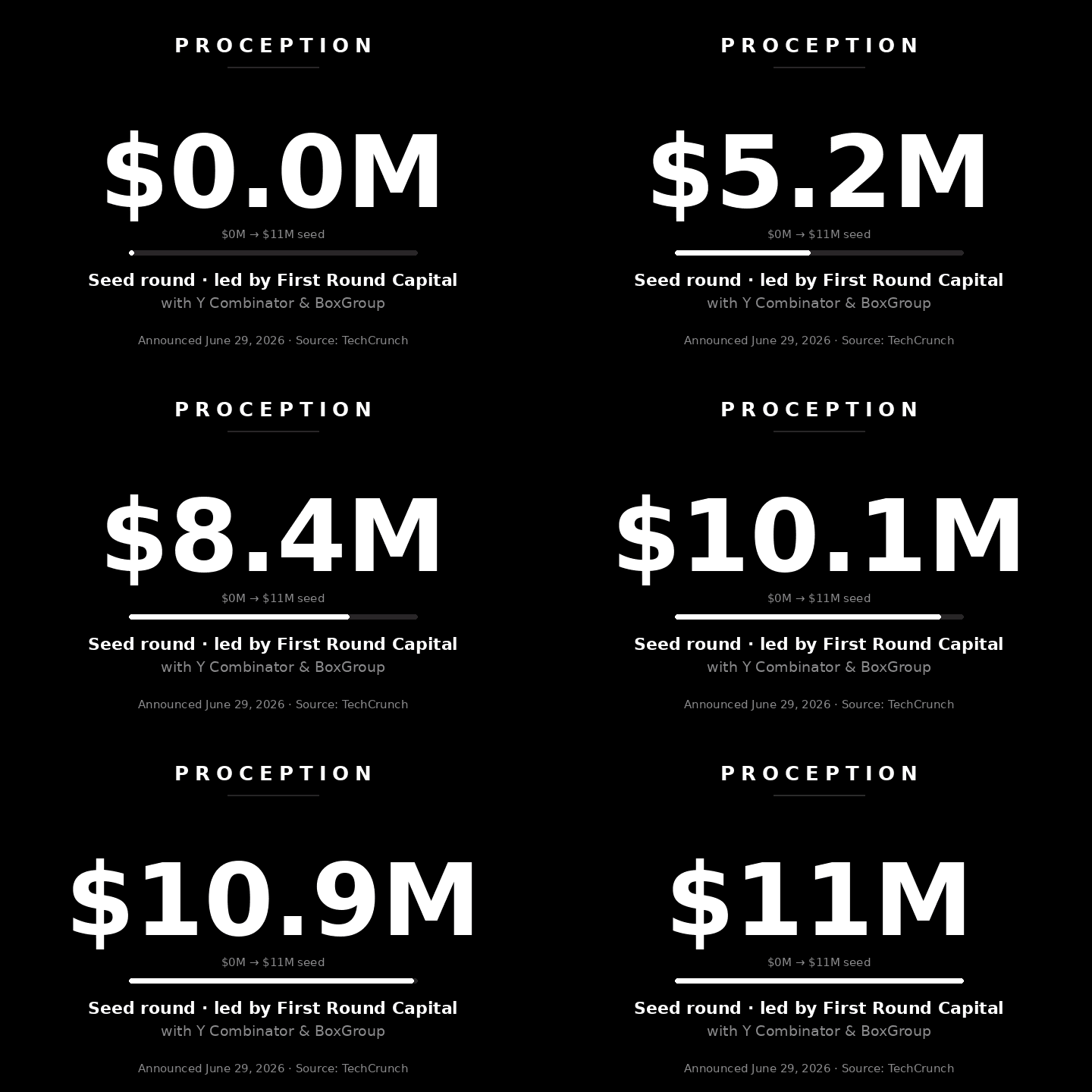
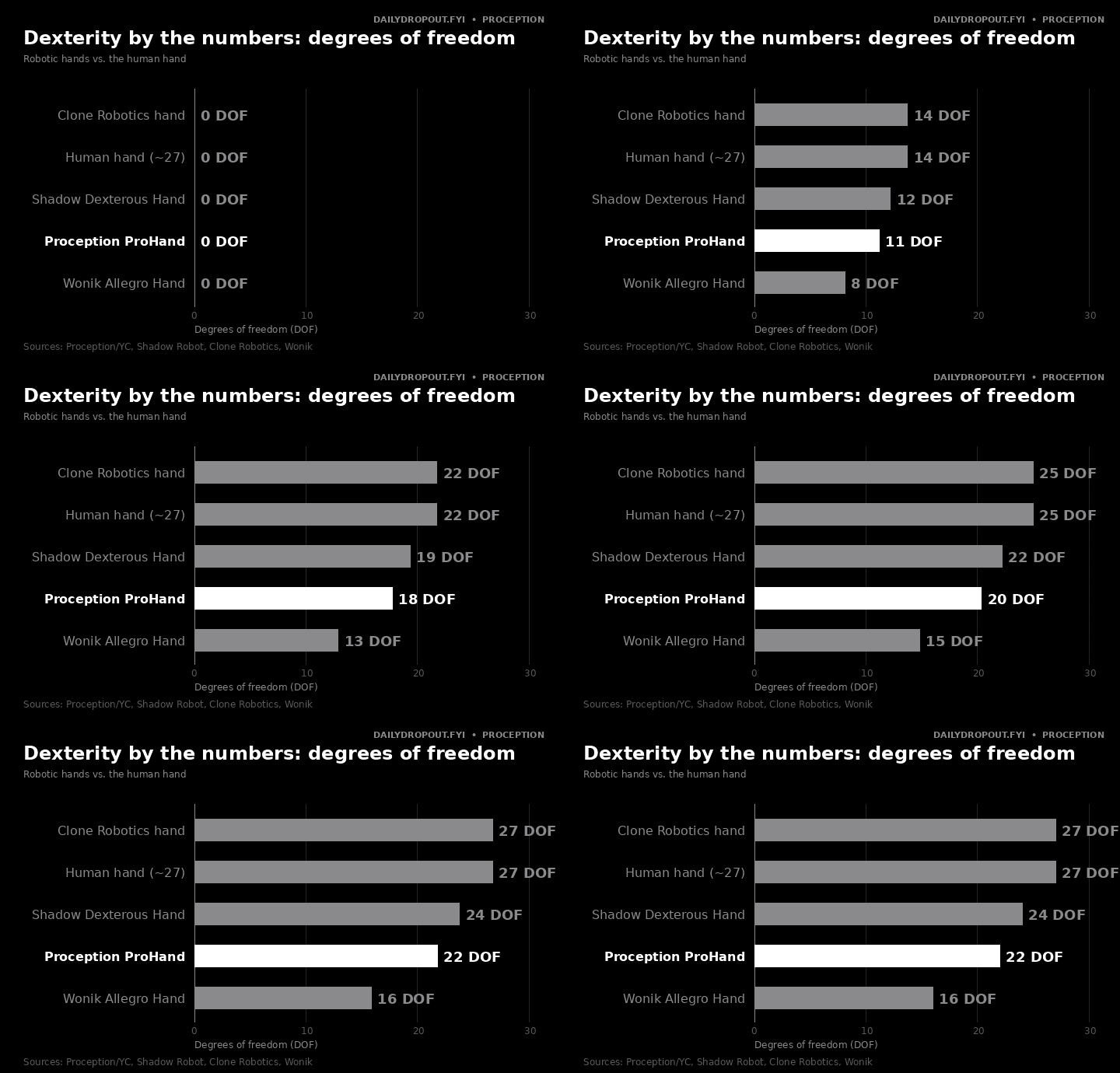
Enter Proception, a Y Combinator–backed team in Mountain View building ProHand, a biomimetic, tendon-driven robotic hand with 22 degrees of freedom and tactile sensors woven into its "skin." The twist is the second product: ProGlove, a sensor-packed glove a human wears to record real manipulation — grip, pressure, contact — without a robot in the loop, sidestepping the slow, expensive teleoperation that bottlenecks everyone else's training data. Founder and CEO Jay Li (ex-Apple, and an electronics lead on Tesla's Optimus) and co-founder Jack Xu (ex-Tesla, ex-Trexo) pitch it like an auto-parts supplier: don't build the whole humanoid, build the hand everyone needs. In June 2026 they raised $11M, and the first batch of hands is already shipping to researchers and robotics companies.
👇 The Drop Down
🌐 Website: proception.ai
📅 Founded: 2024 (YC Winter 2025)
💰 Stage: Seed — $11M led by First Round Capital, with Y Combinator & BoxGroup (June 2026)
📈 Traction: First production batch of the 22-DOF ProHand now shipping to researchers & robotics companies
🔮 Tech Trend: Physical AI / dexterous manipulation
🎯 Target Market: Humanoid & robotics companies, research labs
🏢 Location: Mountain View, CA (~10-person team)
🔎 Why We Like It
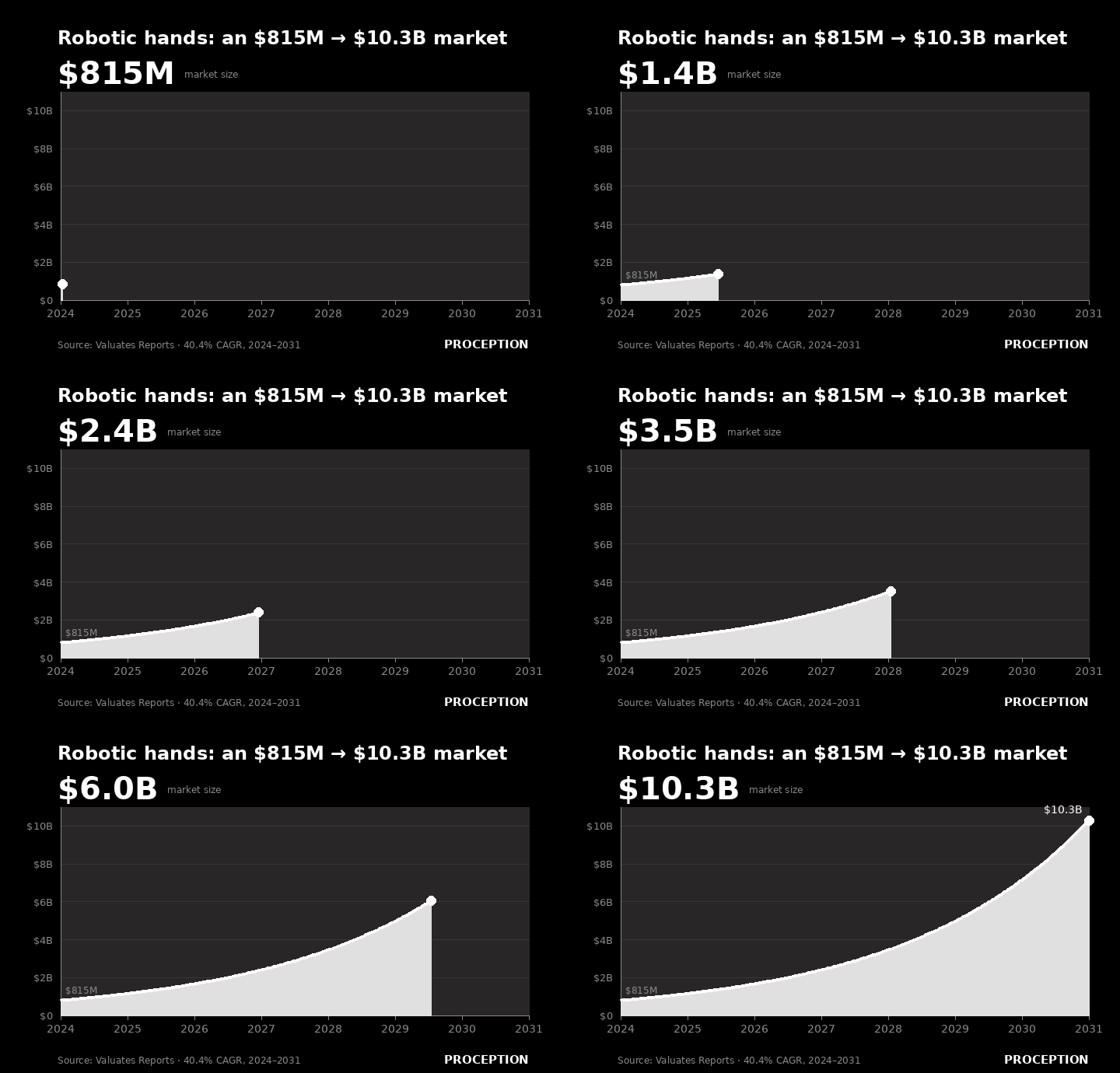
🖐️ They're attacking the bottleneck, not the mascot: While rivals race to unveil whole humanoids, Proception is going after the one subsystem all of them are quietly struggling with. The dexterous-hands market is projected to jump from ~$815M in 2024 to ~$10.3B by 2031 (over 40% a year), tracking a humanoid market compounding just as fast. Selling the hand and the data to train it is a picks-and-shovels bet on the whole field.
🤖 The data flywheel is the real moat: A ProHand is impressive hardware, but ProGlove is the sneaky-smart part. Capturing rich, tactile human-manipulation data without a robot rig lets Proception scale the one thing dexterous AI is starved for — and because the glove and the hand share the same sensor skin, the data maps straight onto the robot. First Round's Bill Trenchard backed them betting they'll have "the best hand in the market."
👫 Founders who've built this exact thing before: Li helped build the hand on Tesla's Optimus and did hardware at Apple, Aurora, and Aeva; Xu came from Tesla and exoskeleton startup Trexo. The Tesla trade-secret suit — filed in 2025, its injunction bid denied, and dismissed following a settlement (terms undisclosed) the same day as the raise — lifts the biggest cloud over the company. The challenge will be out-executing far richer players like Figure and Physical Intelligence.
🤝 Get Involved with Proception
📱 See ProHand & request access — the first batch is shipping now
💼 Join the team — they're hiring hardware & robotics engineers in Mountain View
📰 Read the $11M raise (and Tesla-settlement) story on TechCrunch
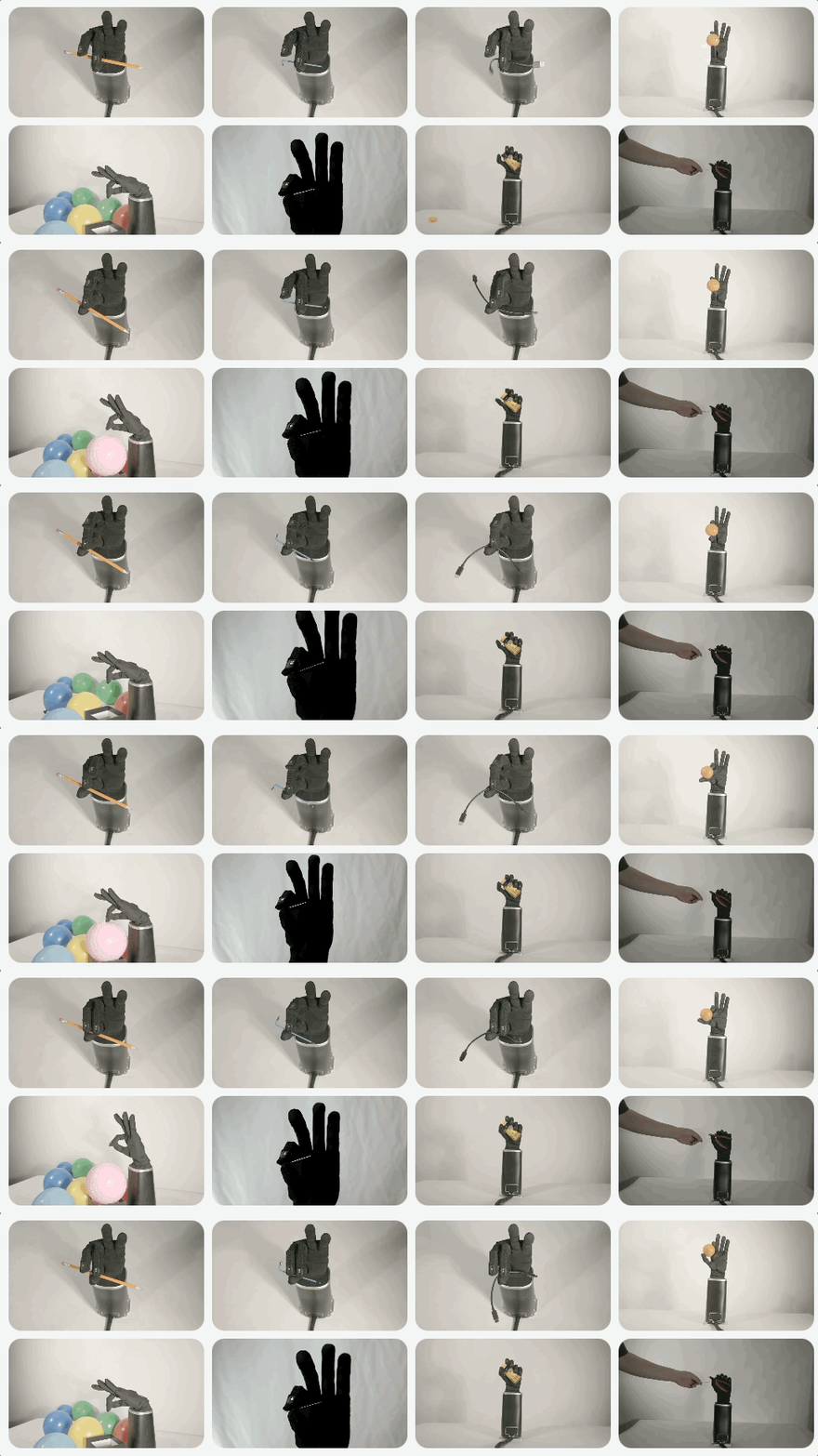
The robot hand is a bottleneck. 🤖 We all know it. Yet, the industry's obsession with recording offline human data via sensor gloves to train robot fingers misses the physical reality of the contact boundary.
Mapping kinematic parameters from a human hand onto a 22-DoF tendon-driven system is an illusion of control. It ignores friction. It ignores micro-slip. It ignores the elasto-plastic transitions that happen when metal meets a table.
Here's the core truth. The mechanical impedance of backdrivable tendon joints is physically isomorphic to the mathematical loss landscape of the control loop. Real force control isn't a post-hoc software calculation. It's a thermodynamic state where stator current changes reflect the exact shape of the contact manifold.
If you bypass this physical-to-silicon manifold, you end up with physical hallucinations. The robot can walk and see. It can even hold a conversation. But the moment the gripper blocks the camera, the system is left completely blind. Directly feeding high-frequency tactile tokens into a slow visual transformer just causes tactile pollution, dropping success rates by 70%.
We don't solve this with massive offline data flywheels. We solve it by isolating tactile signals in the transformer trunk, using asymmetric attention. We map stator current anomalies directly to local, hardware-gated memory override registers. The moment stator current spikes, the hardware dumps speculative trajectories and freezes the joint within microseconds. 💾
Are you still trying to solve micro-slip with raw vision, or is your hardware ready to feel the current?
(๑•̀ㅂ•́)و✧