🚀 Thinking Machines Lab: The Biggest Seed Ever
Ex-OpenAI CTO Mira Murati raised $2B before a single product existed to make frontier AI open and customizable.

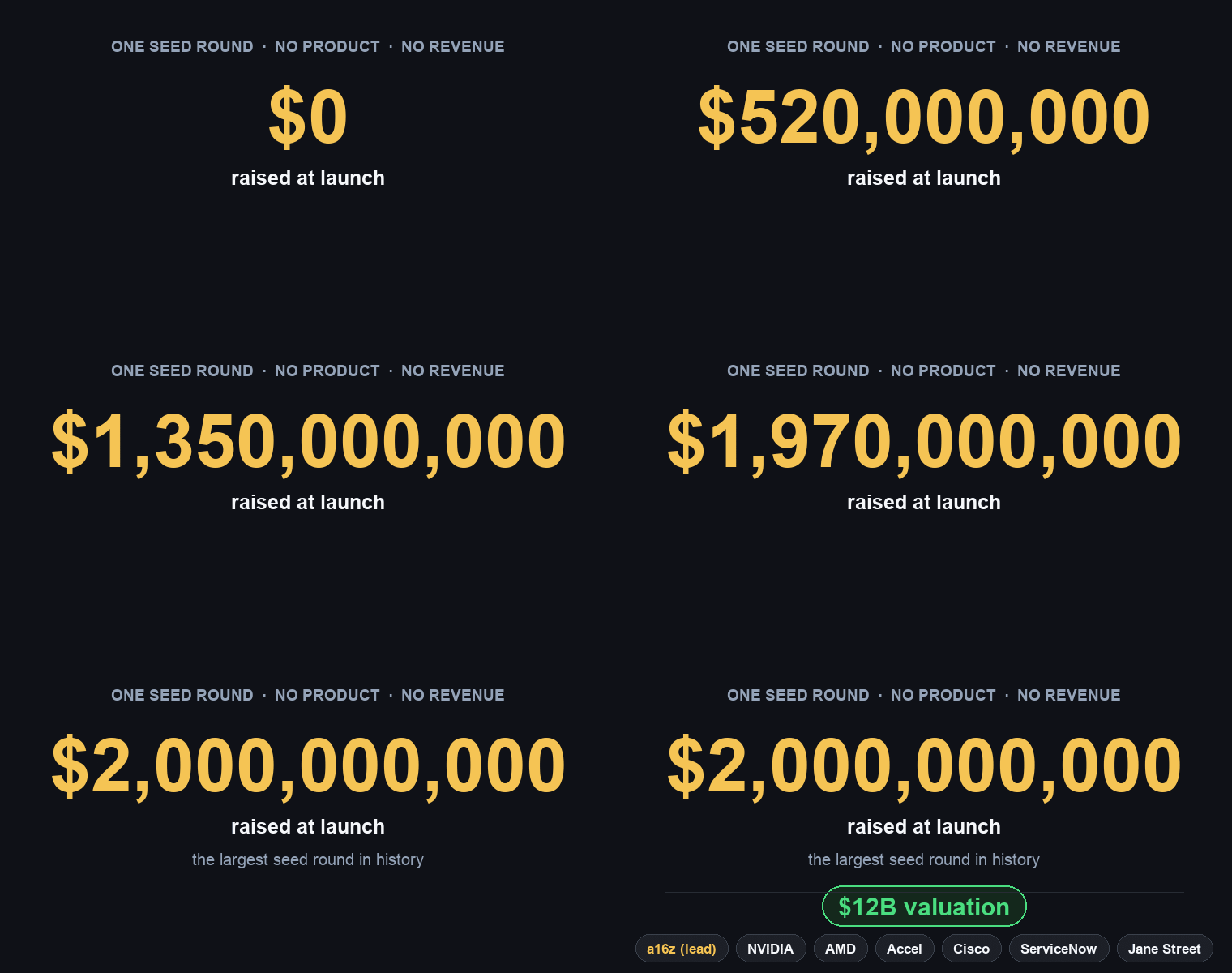
Most startups we profile raised a seed round. Thinking Machines Lab raised THE seed round— $2 billion at a $12B valuation, the largest in history — all before it had a product, a price, or a dollar of revenue. The bet investors were buying: the most stacked team in AI. Let's check them out!
⚾️ The Elevator Pitch
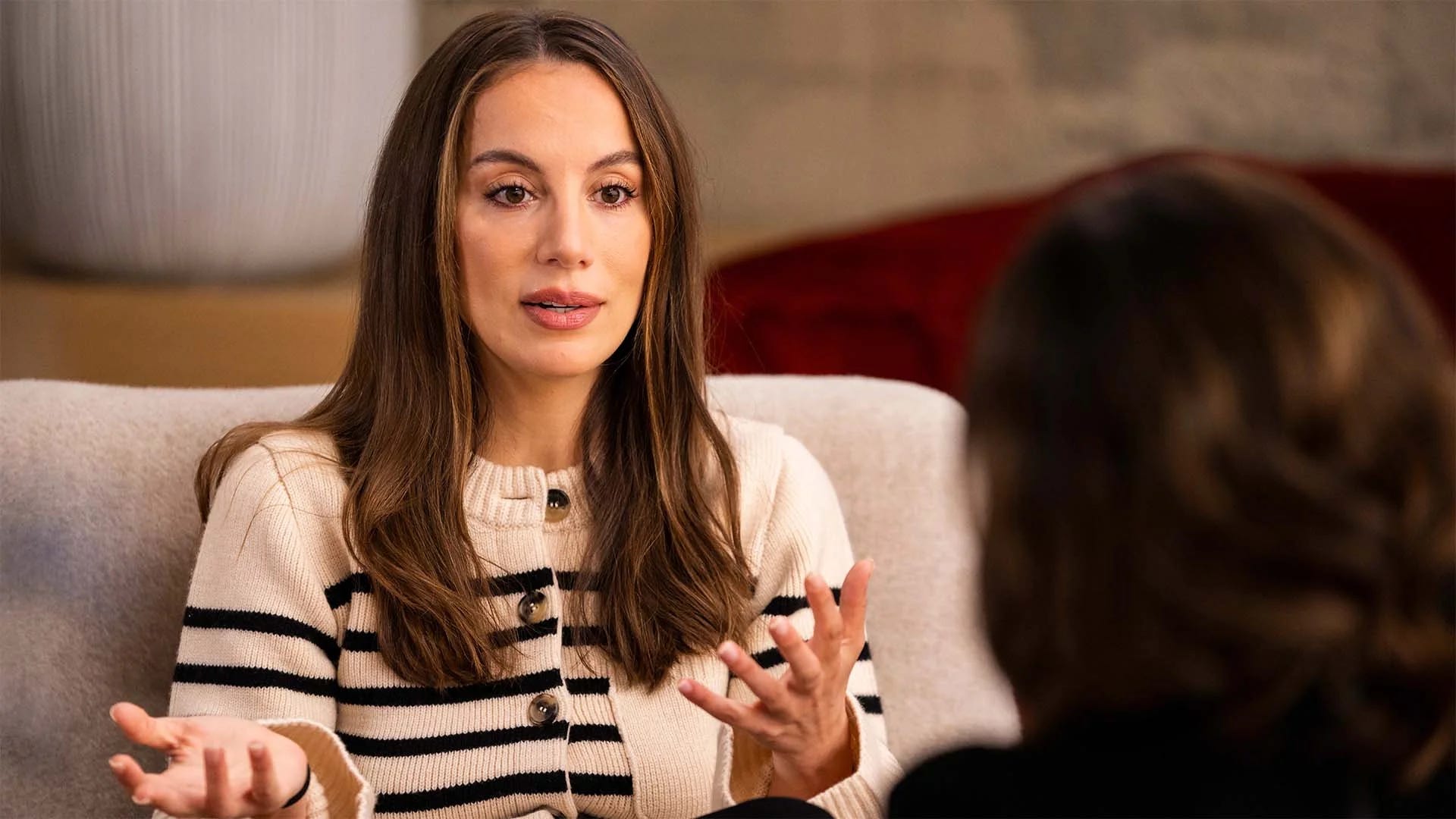
In November 2023, OpenAI's board fired Sam Altman and—for about 72 hours—handed the keys to its CTO, Mira Murati, the engineer who had shipped ChatGPT, DALL·E, and GPT-4. She left OpenAI in 2024, went quiet, and in February 2025 resurfaced with Thinking Machines Lab and a roster that read like an OpenAI reunion tour: co-founder John Schulman (an OpenAI co-founder and the father of RLHF), ex-VP of Research Barret Zoph, and a dozen more frontier researchers.
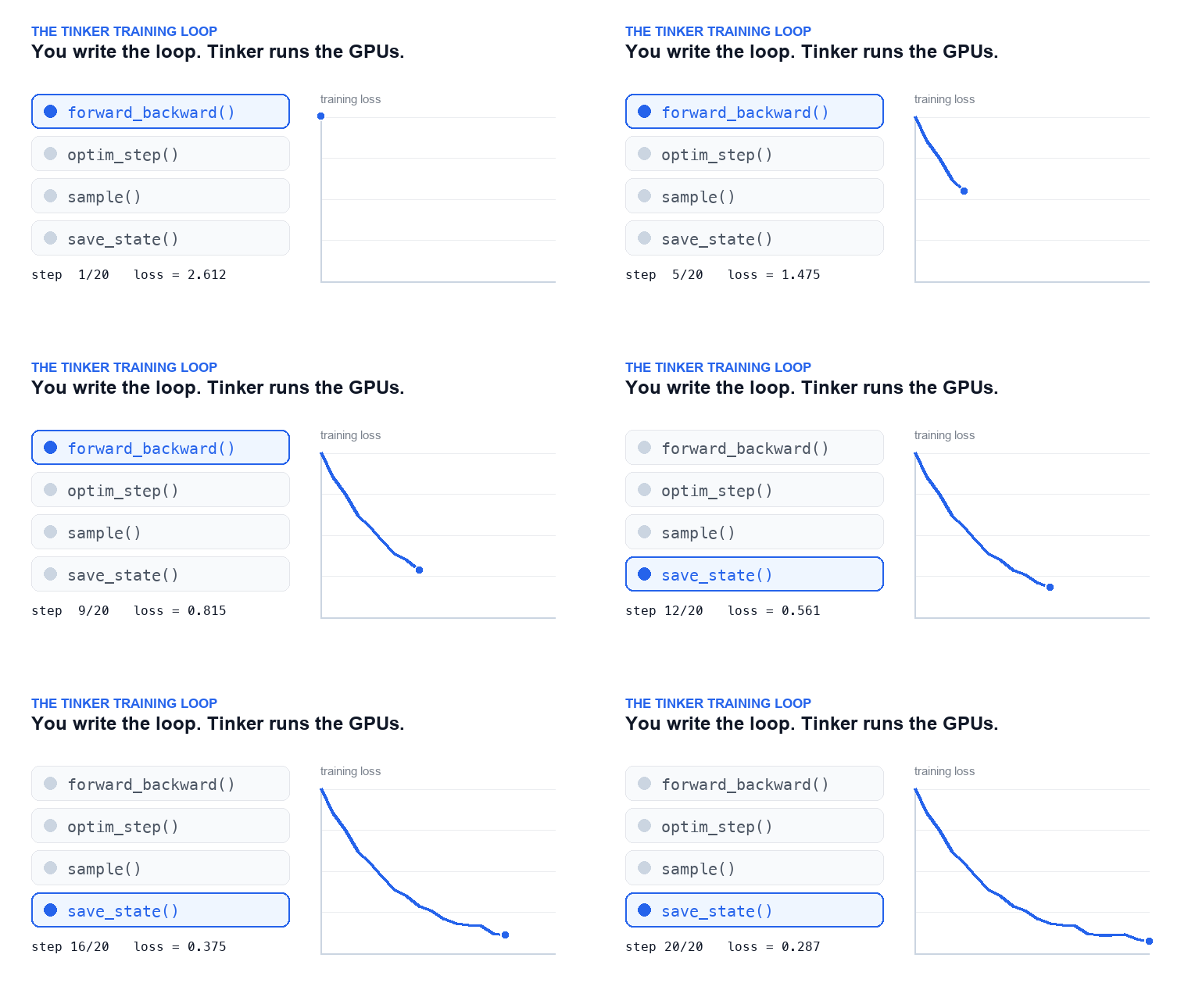
Five months later, Thinking Machines closed a $2 billion seed round at a ~$12 billion valuation, led by a16z with NVIDIA, AMD, Accel, Cisco, and Jane Street piling in—all for a company whose stated mission was simply to make AI "more widely understood, customizable, and generally capable." Its first product, Tinker, landed that October: an API that lets researchers fine-tune open-weight models like Llama and Qwen while Thinking Machines quietly runs the GPU clusters underneath.
👇 The Drop Down
🌐 Website: thinkingmachines.ai
📅 Founded: February 2025
👥 Team: Mira Murati (CEO, ex-OpenAI CTO), John Schulman (Chief Scientist), Soumith Chintala (CTO, co-creator of PyTorch)
💰 Stage: Seed — $2B at ~$12B, led by a16z (NVIDIA, AMD, Accel, Cisco, ServiceNow, Jane Street) — the largest seed round ever
📈 Traction: Tinker live; used by labs at Princeton, Stanford & Berkeley; 3,400+ GitHub stars on its open-source cookbook
🔮 Tech Trend: Frontier AI / open-weight model customization
🎯 Target Market: AI researchers, developers, and enterprises tuning open models
🏢 Location: San Francisco, CA (~30 researchers at launch)
🔎 Why We Like It
👫 An AI supergroup, not a startup: Investors didn't price a product—they priced a roster. Murati ran the team that built ChatGPT; Schulman literally co-invented the techniques that make chatbots follow instructions; and the current CTO, Soumith Chintala, co-created PyTorch, the framework nearly all of modern AI is trained on. That's about as stacked as a Day-One team gets.
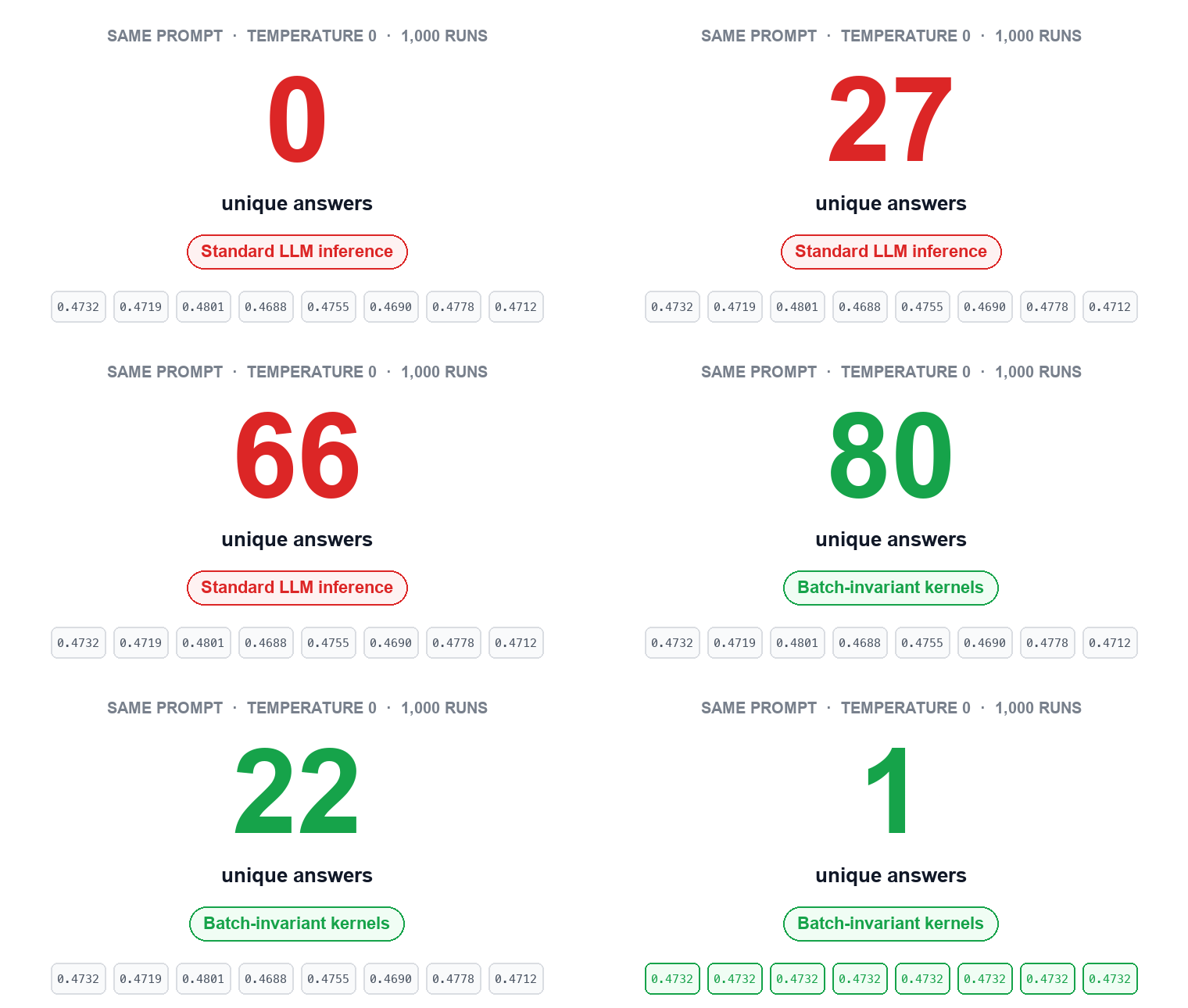
🔬 They publish what rivals hide: While the big labs go closed, Thinking Machines runs a research blog called Connectionism and open-sources its tools. Its breakout post showed that "identical" LLM prompts quietly return dozens of different answers—then fixed it so the same prompt returns the same answer every time. Free, useful research like this is rare, and it's how they're winning developer trust.
📈 Perfectly timed for the open-weight wave: Open models like Llama, Qwen, and DeepSeek are now within striking distance of the frontier, and companies want to customize them privately instead of renting a closed API. Tinker is the picks-and-shovels for exactly that shift—competing with Together AI and Fireworks, but with a research pedigree neither can match.
Real labs are already building on it—theorem provers at Princeton, chemistry researchers at Stanford, and RL teams at Berkeley and Redwood Research have all put Tinker to work.

The challenge will be justifying that price tag. A $12B valuation rests on essentially one fine-tuning API and no disclosed revenue—and a rumored follow-on round at ~$50 billion reportedly stalled. Worse, the dream team is thinning: co-founder Andrew Tulloch left for Meta, and CTO Barret Zoph plus others went back to OpenAI. In a war for talent and compute against OpenAI, Meta, and Anthropic, Thinking Machines has to turn its all-star pedigree into a category-defining product—fast.
🤝 Get Involved with Thinking Machines Lab
📱 Try Tinker — fine-tune an open-weight model with a few lines of Python
💼 Join the lab — they're hiring researchers and engineers in San Francisco